A Traveller's tale: LA, NY and the UK, 2005 - Part 4
New York — continued
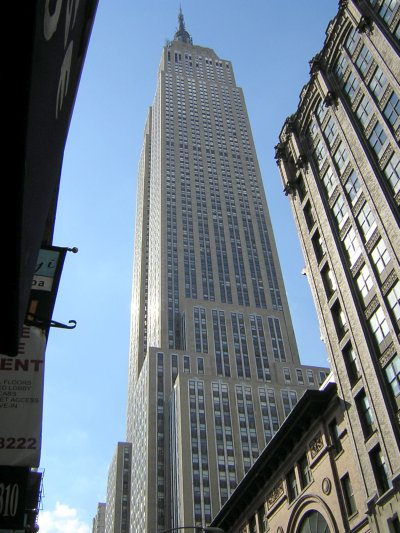 |
Although the Chrysler Building (see Part 3) is probably NY's most beautiful, the most accessible building icon is of course the Empire State. Built in just 16 months between 1930 and 1931 on the site of the old Waldorf-Astoria Hotel at 350 Fifth Avenue, it was the world's tallest building at 102 storeys and 1472 ft (to the top of its antennae) until completion in 1972 of the first World Trade Center tower in Lower Manhattan. After the tragic events of September 11, 2001, it is again NYC's tallest building and the eighth tallest in the world (ignoring antennae and flag poles). In peak times the construction workforce was 3400, and the constant stream of trucks delivering steel and concrete had to be meticulously choreographed to avoid mayhem in the surrounding streets. The final cost (including land) came in at $41 million, largely due to the building cost being only half of the budgeted $50m because of the Depression. Indiana limestone and granite were used for the exterior, trimmed with aluminium and chrome-nickel steel from the 6th floor to the top. The building was officially opened by President Herbert Hoover on May 1, 1931 in a rather novel way—he pressed a button in Washington DC to turn on the lights in the building. Wikipedia Factoids: · The building's distinctive spire was originally designed to be a mast and depot for zeppelins. However, after a couple of brief attempts, the idea proved to be impractical and dangerous, due to the powerful updrafts caused by the size of the building itself. · In dense fog at 9:49 a.m. on Saturday July 28, 1945, a B-25 Mitchell bomber accidentally crashed into the north side between the 79th and 80th floors, where the offices of the National Catholic Welfare Council were located. The fire was extinguished in 40 minutes. 14 people were killed in the accident. During the accident, elevator operator Betty Lou Oliver was injured at her post on the 80th floor and after treatment, was placed in another supposedly safe car to go down to a waiting ambulance at ground level. However, the safety cables of this car had been damaged in the accident, and it went into free-fall with Betty in it. She survived the plunge of 75 storeys (over 1000ft) inside the elevator, and currently holds the Guinness World Record for the longest elevator fall recorded. She survived because the damaged cables piled up in the basement and acted as a coiled spring, cushioning her eventual arrival at the bottom. Also, because the elevator cage was a snug fit inside the shaft, it created a cushion of air underneath it as it fell. · In 1994 without any warning, French urban climber Alain "Spiderman" Robert, using only his bare hands and feet and with no safety devices of any kind, scaled the building's exterior wall all the way to the top. |
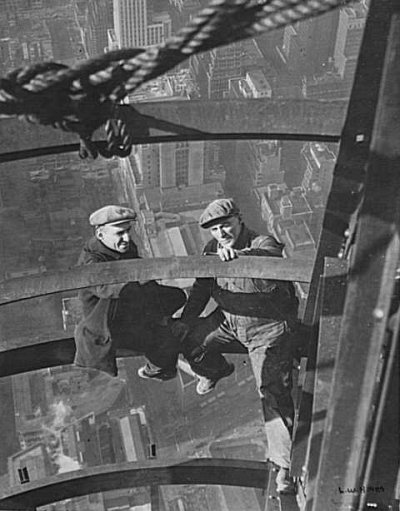
Working on skyscrapers in those days was a dangerous occupation, with hazardous work procedures and little or no safety equipment being provided. At the planning stage, it was anticipated that one worker would die per floor, or over 100 deaths overall. As it turned out, only a "handful" of workers died during construction, compared with the 32 people who jumped to their deaths from the observation deck at the top of the building (it is now enclosed). The photos below are part of a series taken during construction by Lewis Wickes Hine, and convey an impression of what it was like to work on the building. To capture these moments Hine was sometimes dangled 1000ft above Fifth Avenue in a specially-designed cage. Rather him than me.
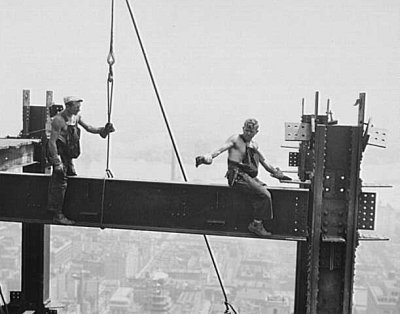
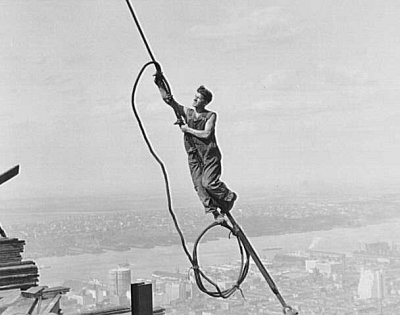
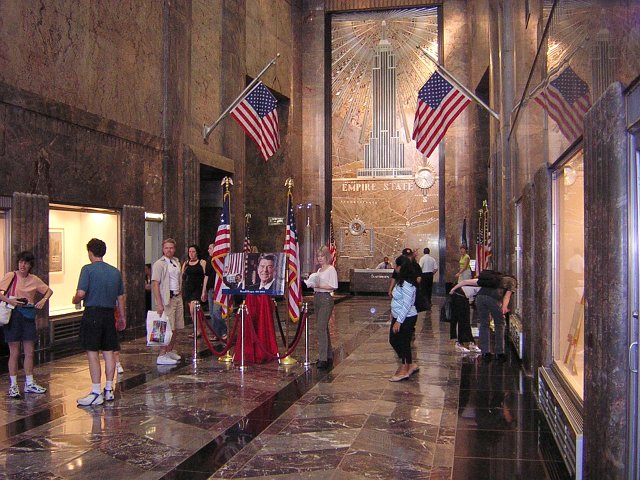
The following shots are from our previous visit in 2004. The views from the top are of course tremendous, and well worth the waiting in line to reach the observation decks.
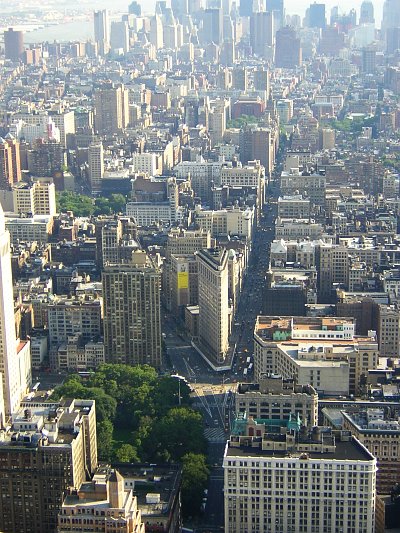
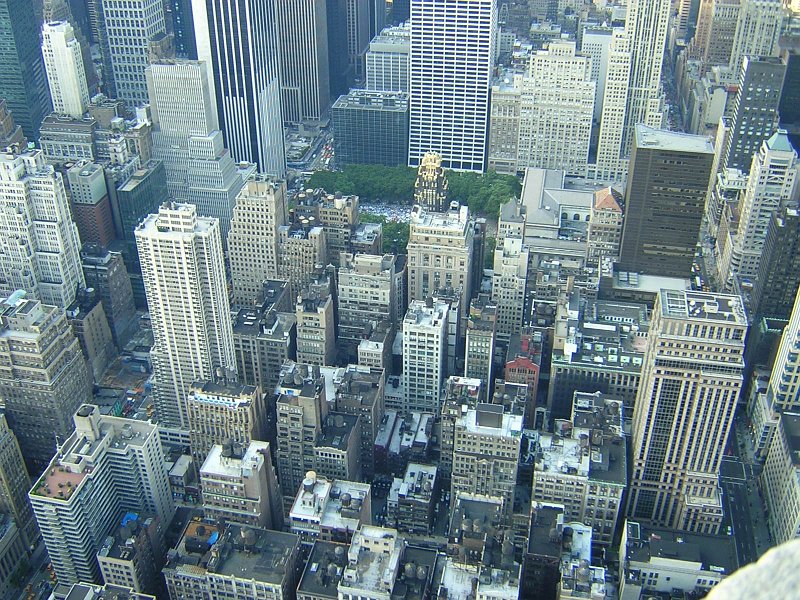
Looking south. The 'Flatiron' Building—the triangular shaped one in the centre foreground—is at the intersection of Broadway and Fifth, was built in 1892 and is a famous NY landmark.
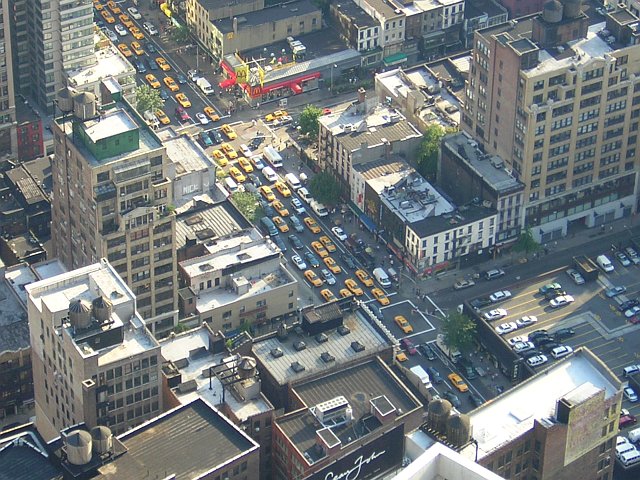
There's an awful lot of yellow cabs in NY...
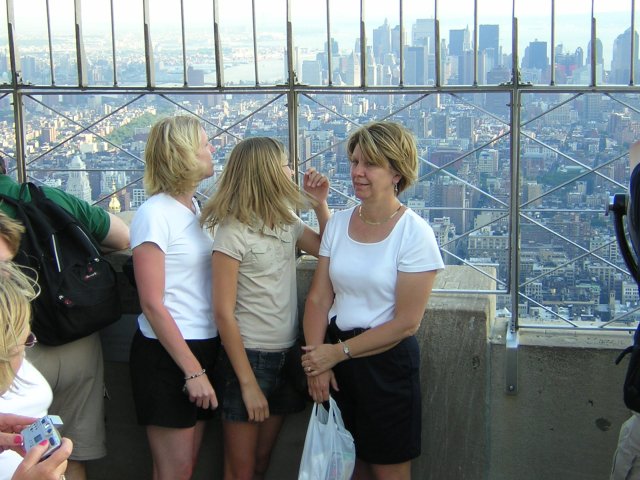
Like mother, like daughters...lining up for the family photograph
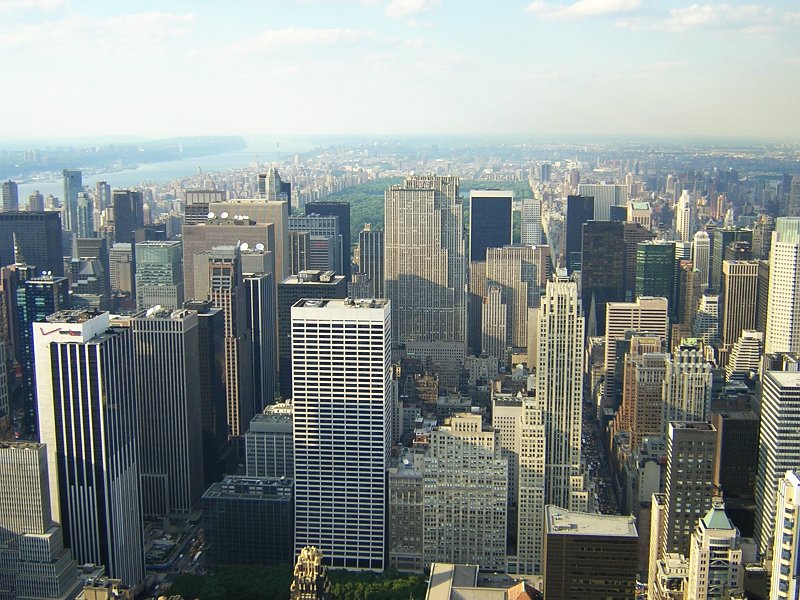
Looking north towards Central Park and the Hudson River. They say on a clear day you can see all the way to Canada...
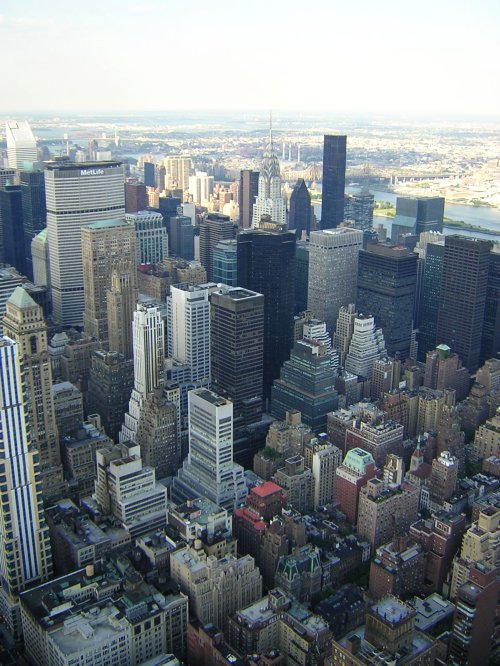
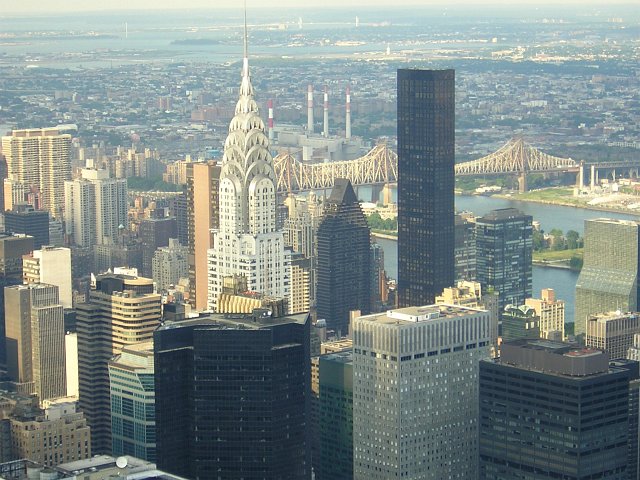
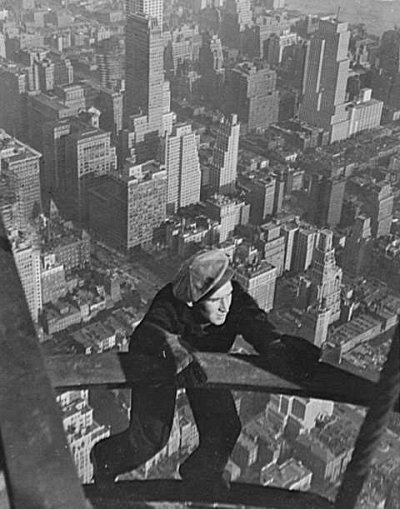
This pic may not be the Empire State but it looks like it should be. You won't catch me taking one like it, that's for sure. You might think your job is tough, but I bet you wouldn't swap with these guys...
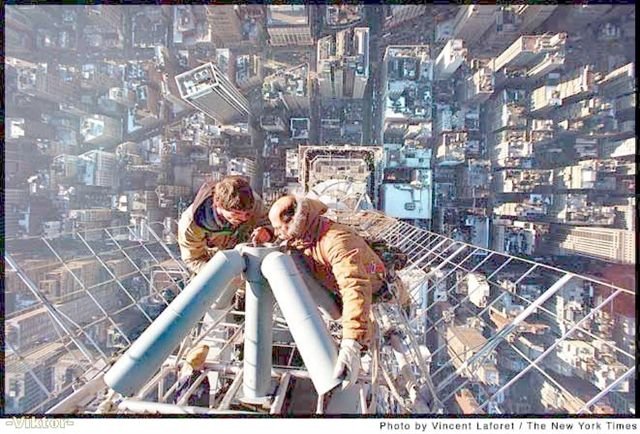
Back at ground level once more, and the famous Madison Square Garden:
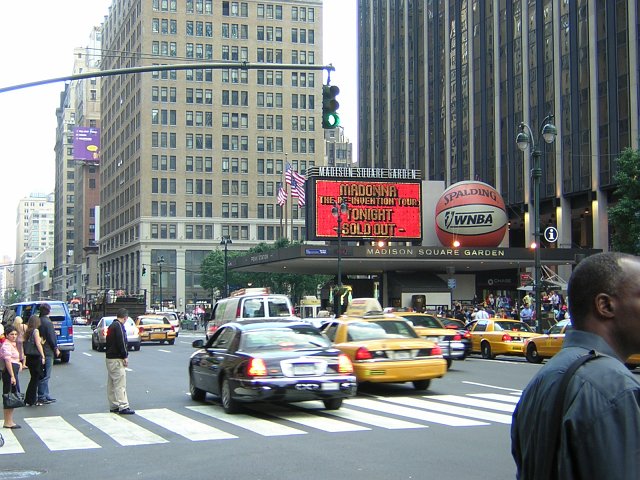
It's often said New Yorkers are rude, but I don't think that's true. They can be impatient, and have a hard-bitten no-nonsense, let's-get-on-with-it exterior (especially the staff in restaurants), but on the whole we found them approachable and helpful. Like this guy selling pickles...
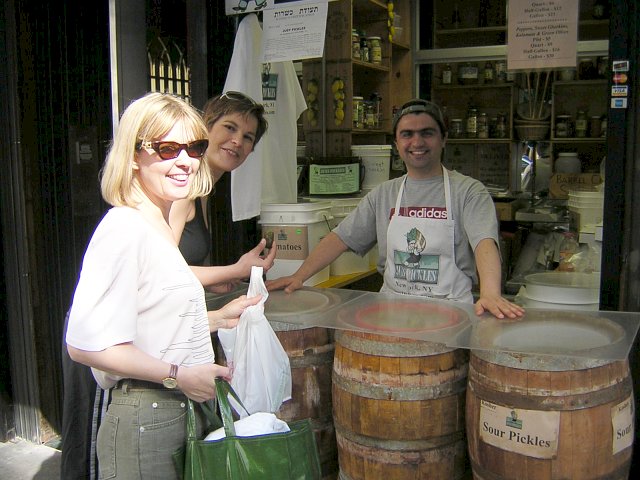
Teresa was in her element in the shops, especially Bloomingdales and Macy's...

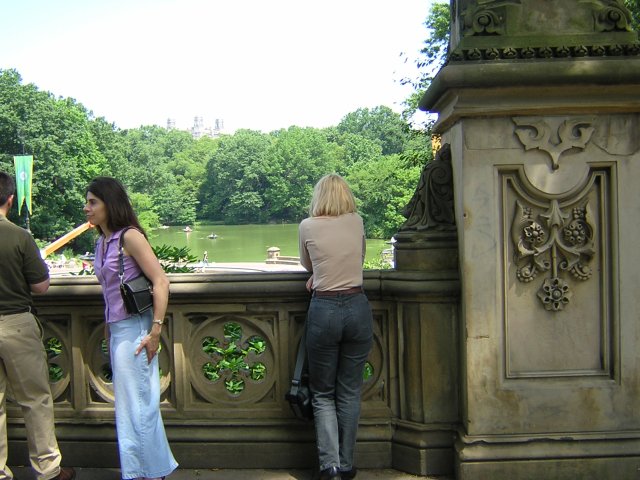
...and in a contemplative mood in Central Park, where one could unwind a bit on a hot summer's day...
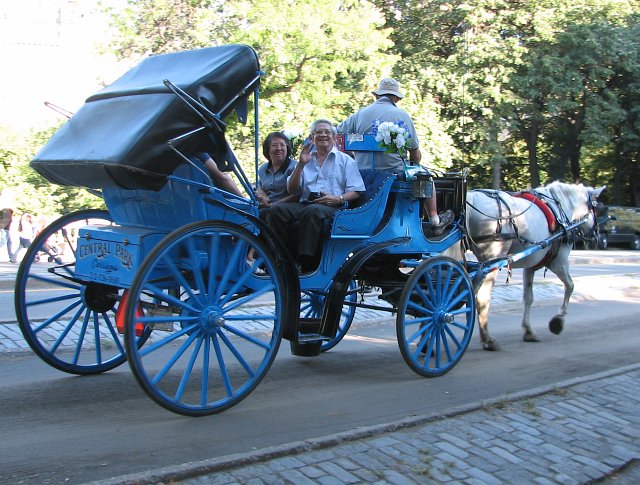
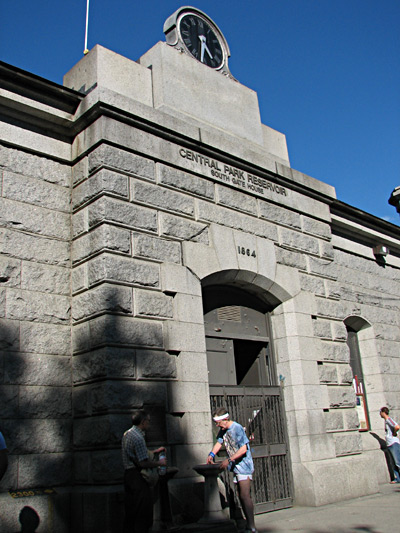
Remember Dustin Hoffman and Laurence Olivier in Marathon Man? Well, this is the pump house where Dustin started and finished his laps around the reservoir (as do thousands of New Yorkers), and where the diamonds spilled into the water. One complete lap is 2300 yards (1.3 miles or 2.1km) long.
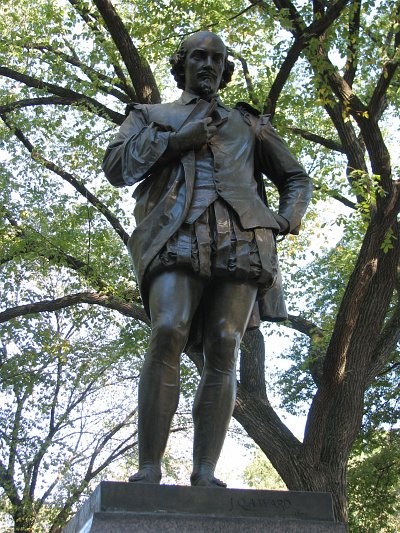
Did you know there's a statue of Will Shakespeare in Central Park? It celebrates the 300th anniversary of his birth.
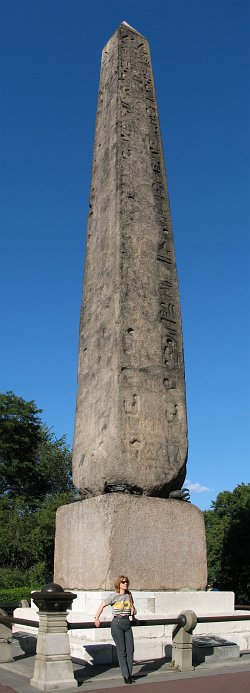 |
And did you know there's also a genuine 3500-yr old Egyptian obelisk? It's one of three similar obelisks (all called "Cleopatra's Needle" although she had nothing to do with them), the other two being in London and Paris. |
Just before we leave Central Park, there's another little touch of yesteryear—the delightful entrance to the subway at 5th Avenue/59th St. The lights proclaiming 'Subway' are totally different to the more usual half white/half green spheres.
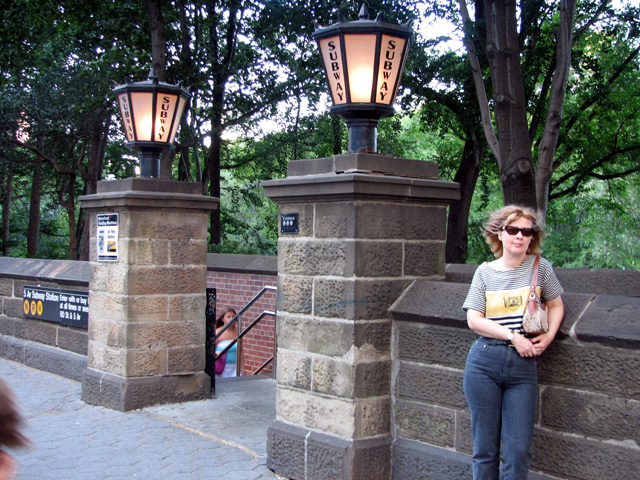
The NY subway is a marvellous way for both residents and tourists alike to get around Manhattan. We found it to be cheap, clean, efficient and safe. But then, we didn't travel very late at night or into the more dodgy districts. I must say though that most of the stations were hot, claustrophobic, very utilitarian-looking (lots of riveted girders and white tiles) and, where the platform was just a narrow aisle between two tracks, somewhat scary.
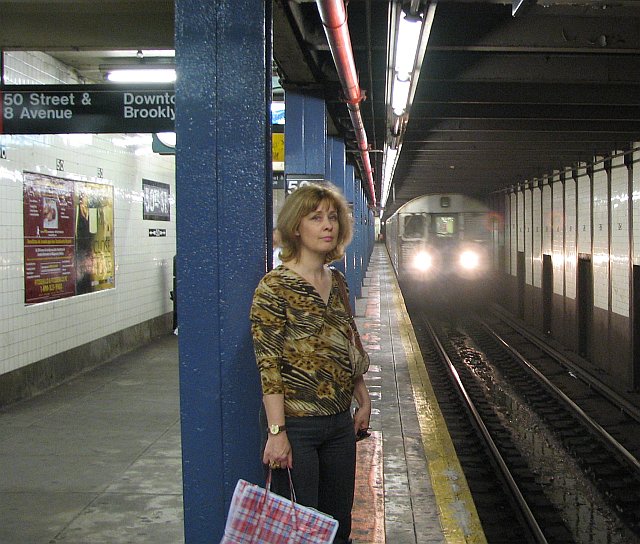
However, not all NY's stations are like that. Take this one for instance...
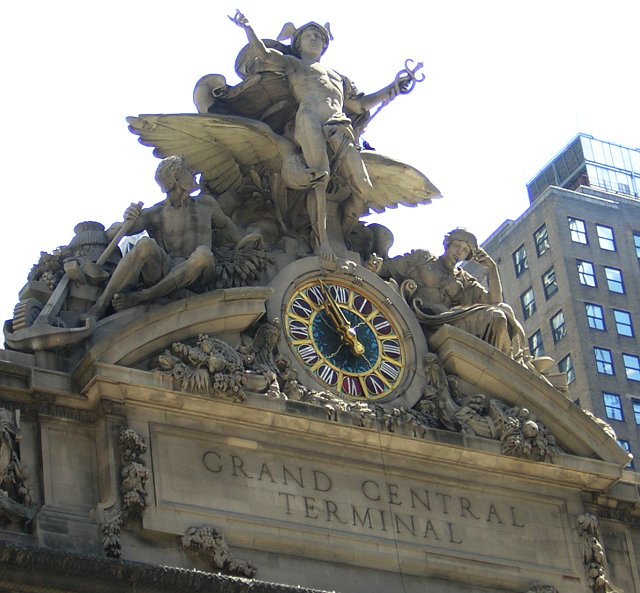
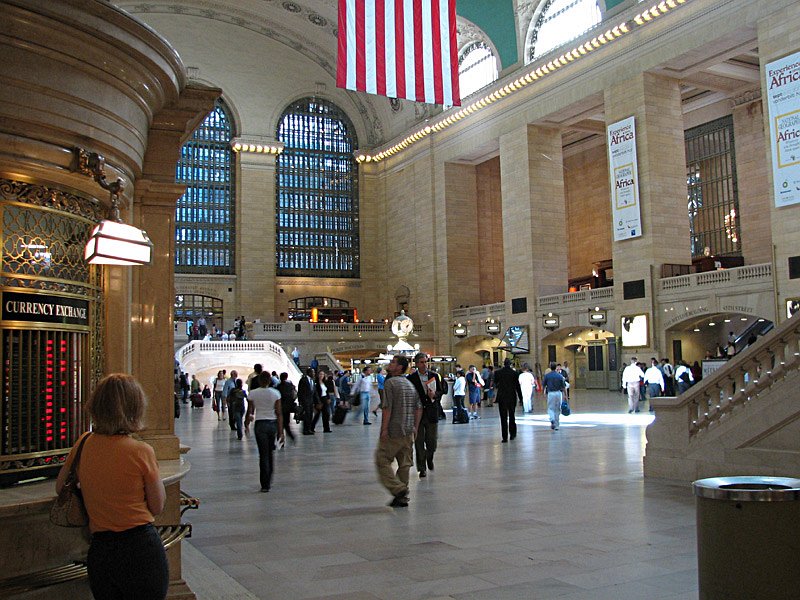
The Main Concourse at Grand Central Terminal has to be the very epitome of what all railway stations should look like—light, airy, clean, busy, and lined with ticket offices, enquiry desks and romantic passageways leading to trains to all parts of the country. The ceiling is decorated with a celestial motif. This is the stuff movies are made of! However, it wasn't always this way. By the late 1960s the Terminal had become run down and was at risk of being demolished by the developer's wrecking ball. Thanks to the efforts of some far-sighted and dedicated people it became listed as a National Historic Landmark, and after a full restoration, re-opened in its present guise in 1998. Put this on your must-see list, but don't change any currency here—the exchange rates are lousy.
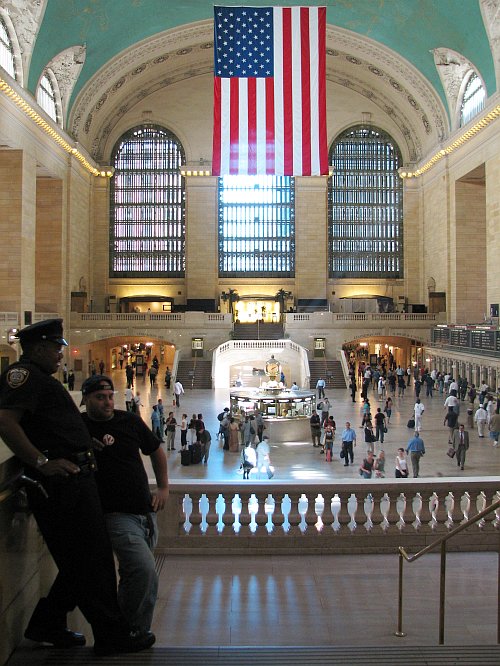 |
One of New York's finest shoots the breeze with what to me looks like a rather suspicious character. But then, I'm suspicious of anyone who doesn't know which way round his cap should go. |
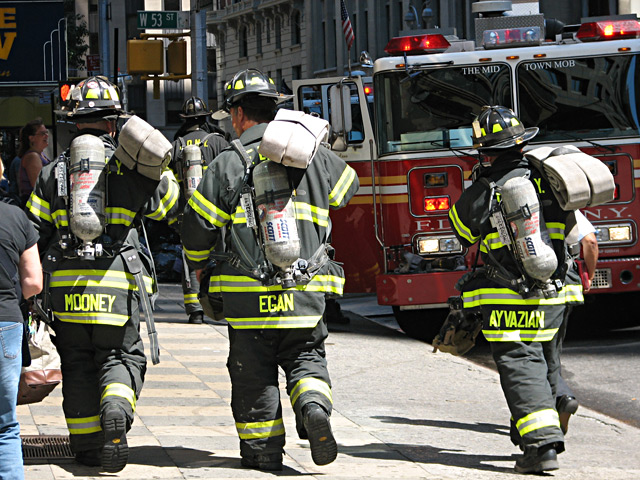
Talking of New York's finest, it was probably the firemen who were the real heroes of 9/11. I caught these guys (below) as they were walking out (somewhat dejectedly, I thought) from a false alarm in a building on Broadway near Times Square.
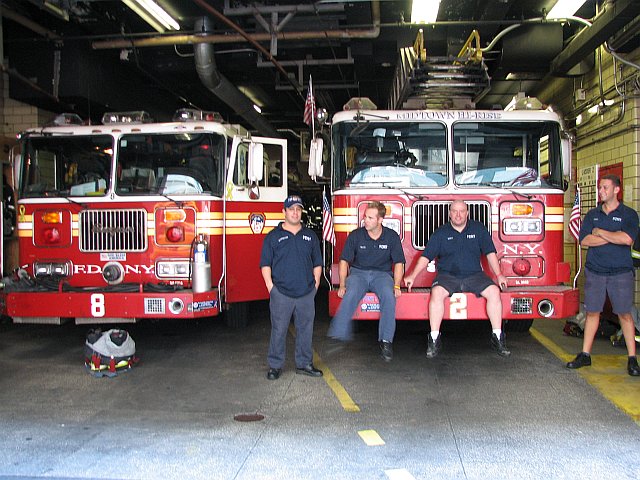
And when they take all the gear off, they turn out to be just regular guys...
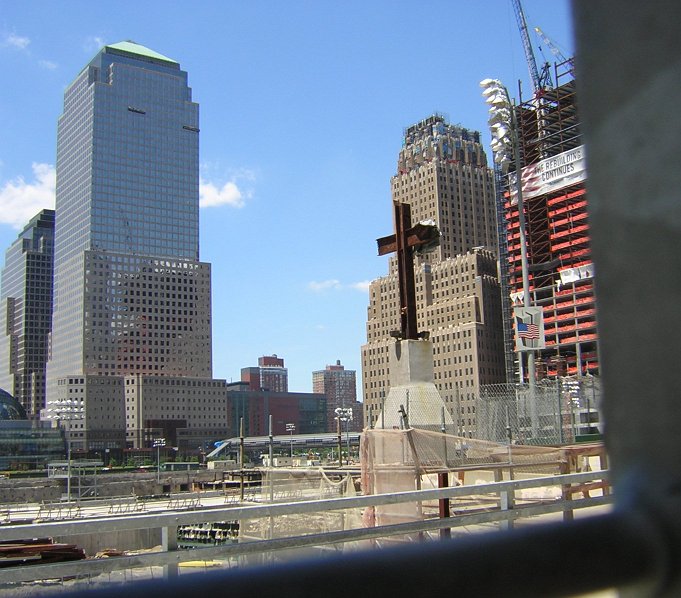
We had a look at Ground Zero (the World Trade Center site) but there was very little to see. Last year it was more dramatic (below). It's still difficult to conceive that two huge skyscrapers once stood there.
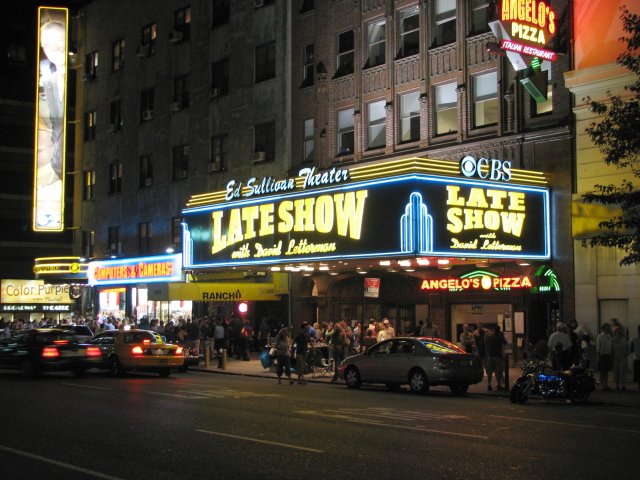
We managed to get into the audience for a taping of the Dave Letterman show. It was an interesting experience, but not one I'd be keen to repeat any time soon, in spite of Jamie Oliver (the Naked Chef) being a guest on the show. On this particular occasion there wasn't much interaction between Dave and the audience, contrary to other DL shows I've seen on tv. The studio background models of the Manhattan and Brooklyn bridges (I think that's what they were meant to be) were good though.
And this is the real thing—the Brooklyn Bridge, opened in 1883. A walk across the bridge is another must-do for the tourist. The hard part is figuring out how to get onto the bridge from the western end in the first place.
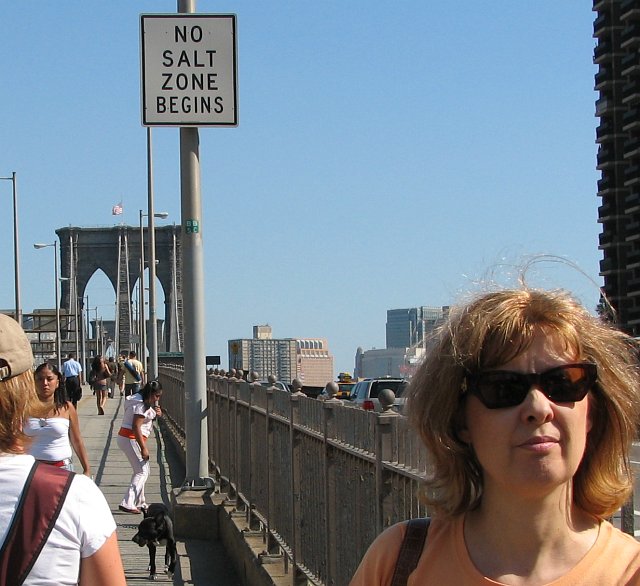
This sign had me foxed until Teresa came up with the answer: this is where they stop salting the road in winter, presumably to avoid corroding the bridge structure any further (and it seems pretty corroded). And there was me thinking it was something to do with residents of Brooklyn having a better diet.
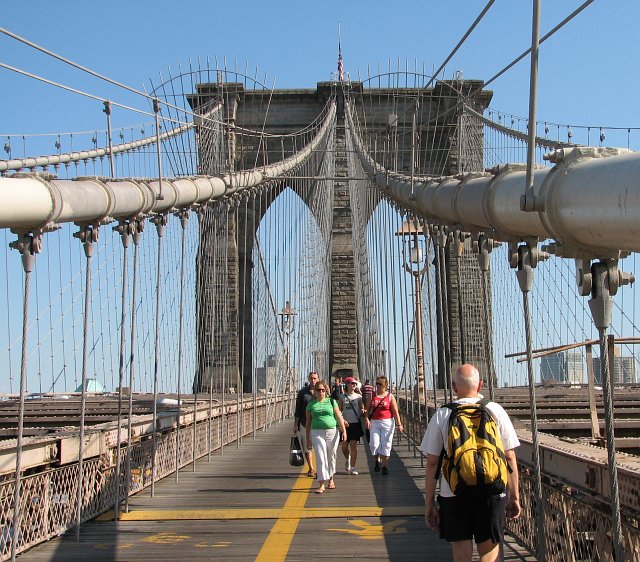
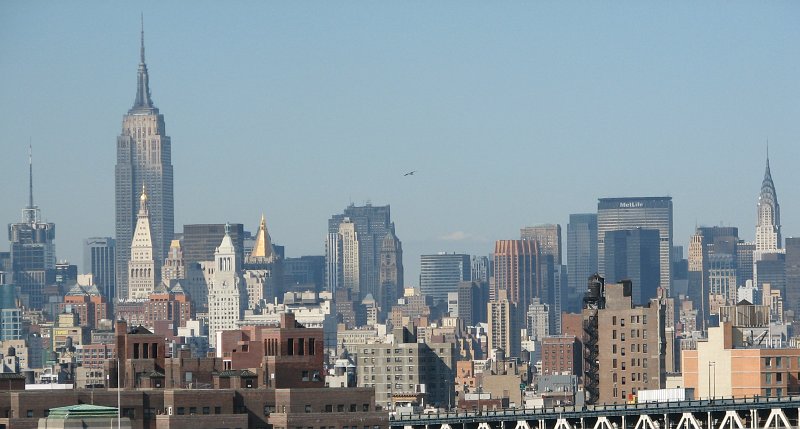
The views from the bridge are quite splendid. To the north can be seen the mid-town skyline and the Manhattan Bridge...
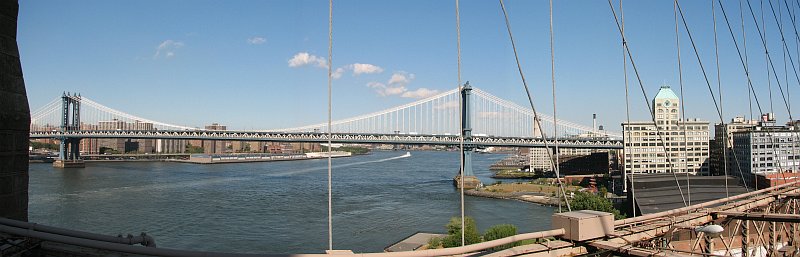
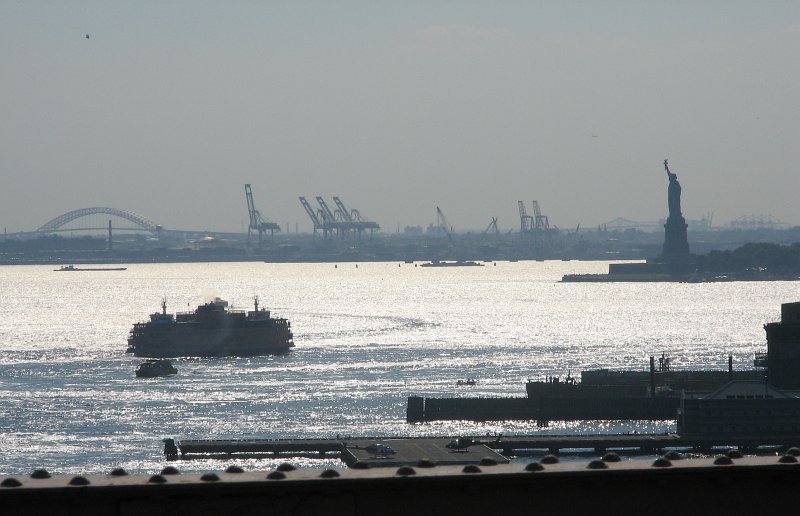
...whilst to the south is someone who needs no introduction...
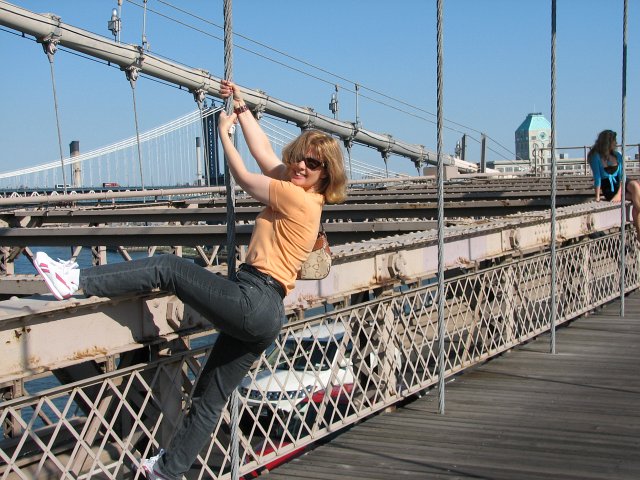
We saw a girl posing sexily for a photo and I said to Teresa, "What about you doing that?" She grabbed a cable and said, "How's this?" Me Tarzan, you Teresa.
New York is famous for its restaurants and deli's, none more so than the Carnegie Deli on 7th Avenue (at 55th St). It ain't swanky but the hot corned beef and pastrami sandwiches and the cheesecake are to die for (and you probably will if you have too many of them). Be warned—the sandwiches are HUGE and most people are happy to pay the $3 extra to share one between two. Wait until you've finished your sandwich before ordering dessert, as you may not have enough holes in your belt to accommodate both.
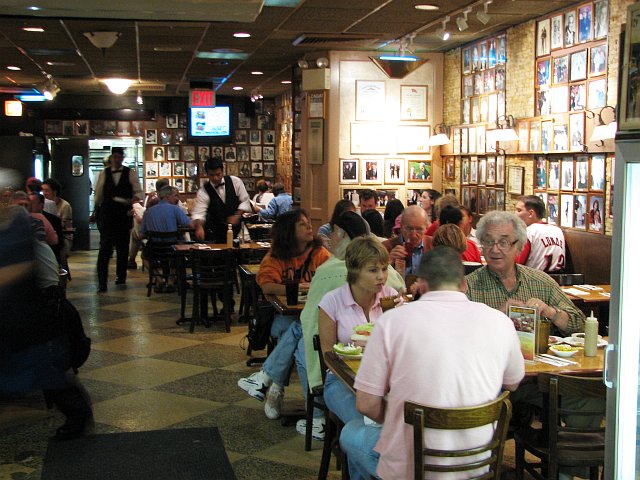 |
'Communal' dining is the order of the day at Carnegie's but you're bound to have some friendly conversation. |
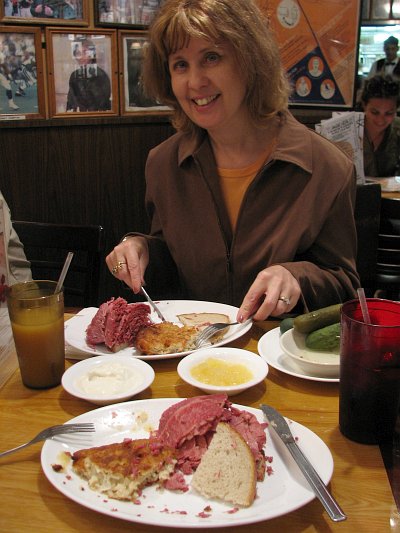 |
Mmmmm! Hot corned beef on rye with potato cakes and pickles! Would you believe there's only half a sandwich on each plate? Pass the defibrillator, please! |
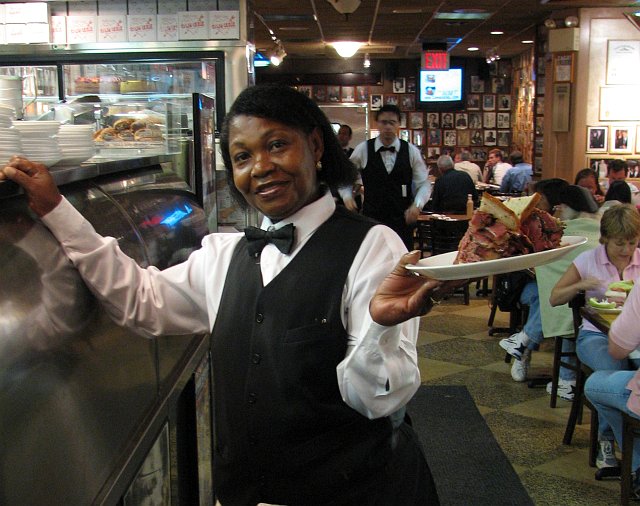 |
"One heart attack, comin' right up!" |
Continue to Part 5
Back to Part 1
Back to Part 2
Back to Part 3
Home
Written 6 November 2005.
Last updated 6 November 2005.